Aaron Carlisle profile photo

Aaron Carlisle

Associate Professor, Marine Science and Policy University of Delaware

  • Lewes DE

Prof. Carlisle research focuses on how the environment and organismal biology interact to influence the ecology of species.

Contact
University of Delaware logo

University of Delaware

View more experts managed by University of Delaware

Spotlight

2 min

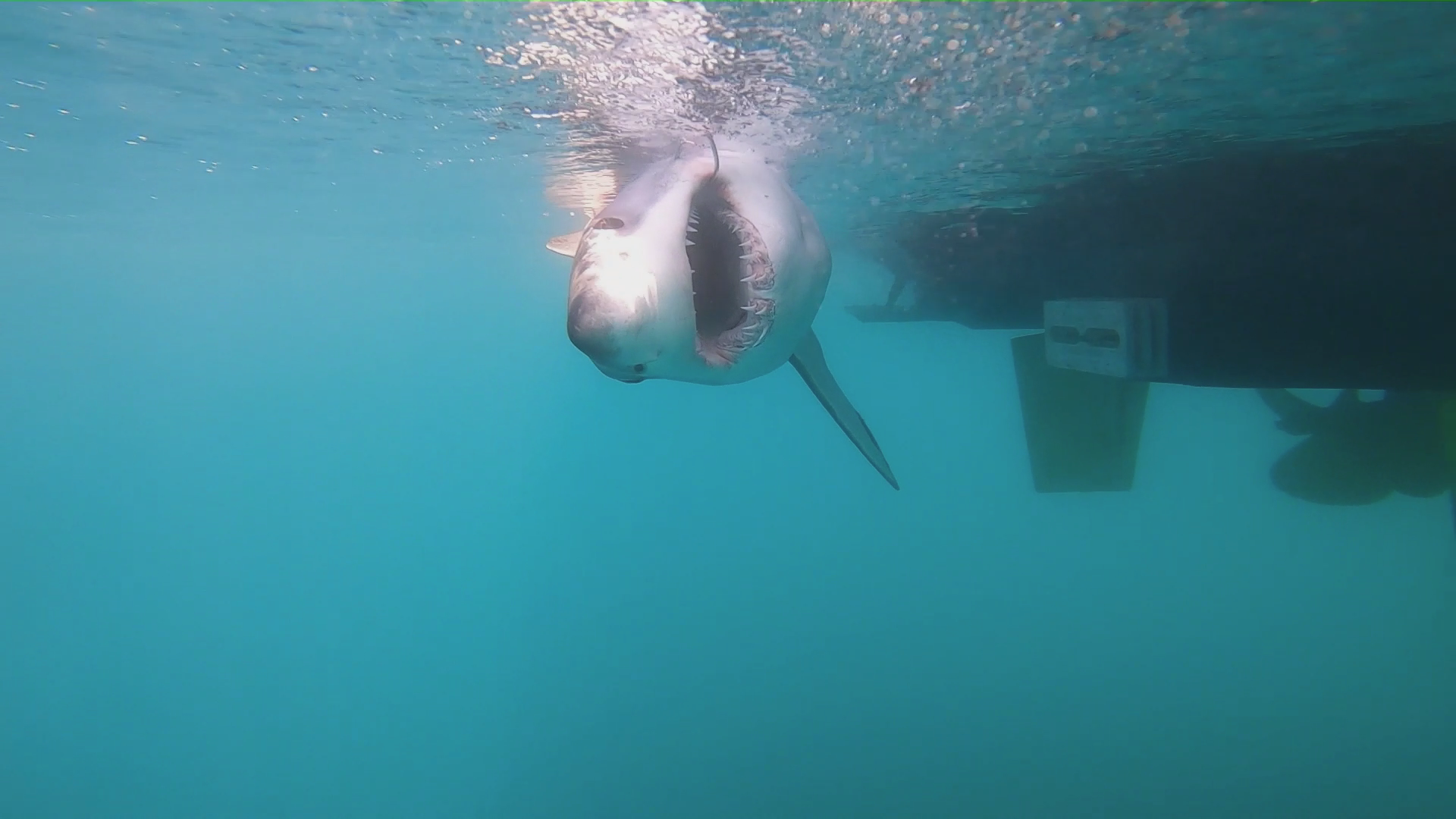
Just in time for Shark Week, the ocean's most famous predators are experiencing a redemption arc. Marine ecologists at the University of Delaware have fitted sharks with sensors and sent them out into the Atlantic Ocean to gather data that could help predict hurricanes. The research is led by UD professors Aaron Carlisle and Matt Oliver and PhD student Caroline Wiernicki. Enlisting sharks as amateur meteorologists comes at a critical time. The National Oceanic and Atmospheric Administration's capacity to forecast hurricanes has been hampered by federal cuts to staff and funding. Sharks also help speed things up. NOAA has partnered with UD and other Mid-Atlantic universities, which deploy gliders to the continental shelf to collect data that tell researchers what the water column looks like as hurricane season approaches. The gliders are effective but also slow moving and expensive to deploy and maintain. The researchers have successfully deployed three tags: two conductivity, temperature and depth (CTD) tags on two mako sharks (for oceanographic data collection); and a satellite tag on one white shark (to help evaluate if that species would be a good candidate for CTD tagging down the road). As of July 21, the white shark has been pinging the research team ever since he was tagged in May. He was recently tracked off Martha's Vineyard and has been surfacing every day – showing up in areas like Cape Cod and Long Island. The mako sharks were tagged off of the Delaware coast and swam south, bopping up and down between the Delmarva Peninsula and just north of Cape Hatteras. Carlisle, Oliver and Wiernicki are available for interviews. To reach Carlisle directly, visit his ExpertFile profile and click on the contact button. Interested journalists can also send an email to MediaRelations@udel.edu.

Aaron Carlisle

2 min

In Delaware, recreational shark fishing is popular, with anglers taking part in halfand full-day shark fishing trips. However, they are prohibited from keeping protected species of sharks. A University of Delaware research team led by Aaron Carlisle, assistant professor in UD's School of Marine Science and Policy (SMSP), is studying the impact of releasing these sharks, aiming to understand their post-release survival and how fishing operations handle them. Carlisle, graduate student Bethany Brodbeck and Ed Hale, assistant professor and aquaculture specialist for Delaware Sea Grant, are conducting the field research for the study, riding along with recreational fishing vessels to better understand what happens to sharks when they are caught and released. Another component to the research is being led by George Parsons, E.I. du Pont Professor at UD’s College of Earth, Ocean and Environment, who is looking at the economic aspect, using survey-based research to value the shark fishery and study anglers’ perceptions and attitudes toward sharks and their management. Carlisle said the two concurrent studies will help gauge the biological and economic impacts of the shark fishery in Delaware. “We want to find out how much money the fishery is actually drawing to the economy,” Carlisle said. “We also want to find out how the fishery is actually impacting the populations of sharks in Delaware, especially the protected ones.” The research was funded by Delaware Sea Grant, which helps communities wisely use, manage and conserve coastal resources. To arrange an interview with Carlisle, simply click on the link to his profile. Pressing the contact button and using the form will send your request directly to him and a member of UD's media relations team.

Aaron Carlisle

Media

Biography

Dr. Carlisle joined the University of Delaware in 2018 as Assistant Professor of Fisheries Ecology. His research focuses on how the abiotic and biotic environment and organismal biology interact to influence the behavior, distribution and ecology of species, and how these interactions impact their population dynamics, life history strategies, and ecosystem roles. He uses a variety of approaches and technologies, such as stable isotope analysis and biologging, combined in new ways to provide unique insights into marine species.

Dr. Carlisle is a graduate of Stanford University (Ph.D.), Moss Landing Marine Laboratories (M.S.), and Princeton University (A.B.). He is a member of the IUCN Shark Specialist Group and serves on the board of directors of the American Elasmobranch Society.

Industry Expertise

Research
Education/Learning

Areas of Expertise

Stable Isotope Ecology
Evolutionary Biology
Physiological Ecology
Marine Fishes
Biological Sciences

Media Appearances

Sharks vs. hurricanes? Scientists say predators can help track huge storms.

USA Today  online

2025-07-25

National outlet reported on the work of Aaron Carlisle and Matt Oliver, professors of marine science and policy, who tagged sharks and sent them out to find data that could predict hurricanes.

View More

Sharknado? The next generation of hurricane forecasters could be sharks

The Independent  online

2025-07-25

Outlet reports on research conducted by Aaron Carlisle and Matthew Oliver, professors of marine science and policy, who tagged sharks to collect data that could predict hurricanes.

View More

Where will the next big hurricane hit? Ask the sharks.

The Washington Post  online

2025-07-23

The Washington Post ran a feature story on research by Aaron Carlisle, professor of marine science and policy, and PhD student Caroline Wiernicki, who tagged sharks and sent them out into the Atlantic Ocean to collect data on hurricanes.

View More

Articles

Assessing the Capacity of Pelagic Sharks to Serve as Ocean Observing Platforms in the Mid-Atlantic Bight and Beyond

IEEE

2022

The use of marine animals as ocean observing platforms (OOPs) has been identified by scientists and managers as having the ability to significantly improve existing oceanographic models and data resources. As OOPs, animals are fit with oceanographic sensors with the capacity to measure in situ temperature and conductivity with an accuracy comparable to ship-based conductivity-temperature-depth (CTD) casts or autonomous drifters.

View more

The sociality of Atlantic sturgeon and sand tiger sharks in an estuarine environment

Animal Behaviour

2022

Social network analyses are used by ecologists to examine the various drivers of animal social structures. While social behaviours are found throughout the animal kingdom, their roles in structuring marine communities are poorly understood. Comparisons of sociality across marine fishes in the same location and time are rare.

View more

Remote Sensing and Marine Animal Tags: How Much Data is Needed to Detect Environmental Selection in Marine Predators?

AGU Fall Meeting 2022

2022

Understanding the selection of environmental conditions by marine predators requires knowledge of where they are, but also of where they are not. Tracking marine organisms is challenging because animals can only be detected when they are at the surface.

View more

Research Grants

Development of a new biologging tag to record in-situ oxygen use of fish in the wild

University of Delaware Research Foundation Strategic Initiative Grant

2018

Characterizing the ecological role of apex predators in the Delaware Bay Ecosystem and their potential impacts on managed species

Delaware Sea Grant

2019

Accomplishments

American Society of Ichthyologists & Herpetologists Student Travel Award

2012

Coastal and Estuarine Research Federation Early Career Travel Award

2013

Education

Princeton University

BA

Ecology and Evolutionary Biology

1999

San Jose State University/Moss Landing Marine Laboratories

MSc

Marine Science

2006

Stanford University

PhD

Biological Sciences

2012

Affiliations

  • American Fisheries Society
  • American Elasmobranch Society
  • International Bio-logging Society
  • Coastal and Estuarine Research Federation
  • Western Society of Naturalists

Event Appearances

Niche partitioning and variability in resource use in mesopredators in BIOT

Fondation Bertarelli Marine Science Symposium  London, UK

Does ENSO Drive Changes in the Trophic Ecology of Juvenile Market Squid?

American Fisheries Society  Atlantic City, NJ

New insights into the trophic ecology of the Cookie Cutter Shark from stable isotope analysis and environmental DNA

American Fisheries Society  Atlantic City, NJ