He said he'd do it and he did.
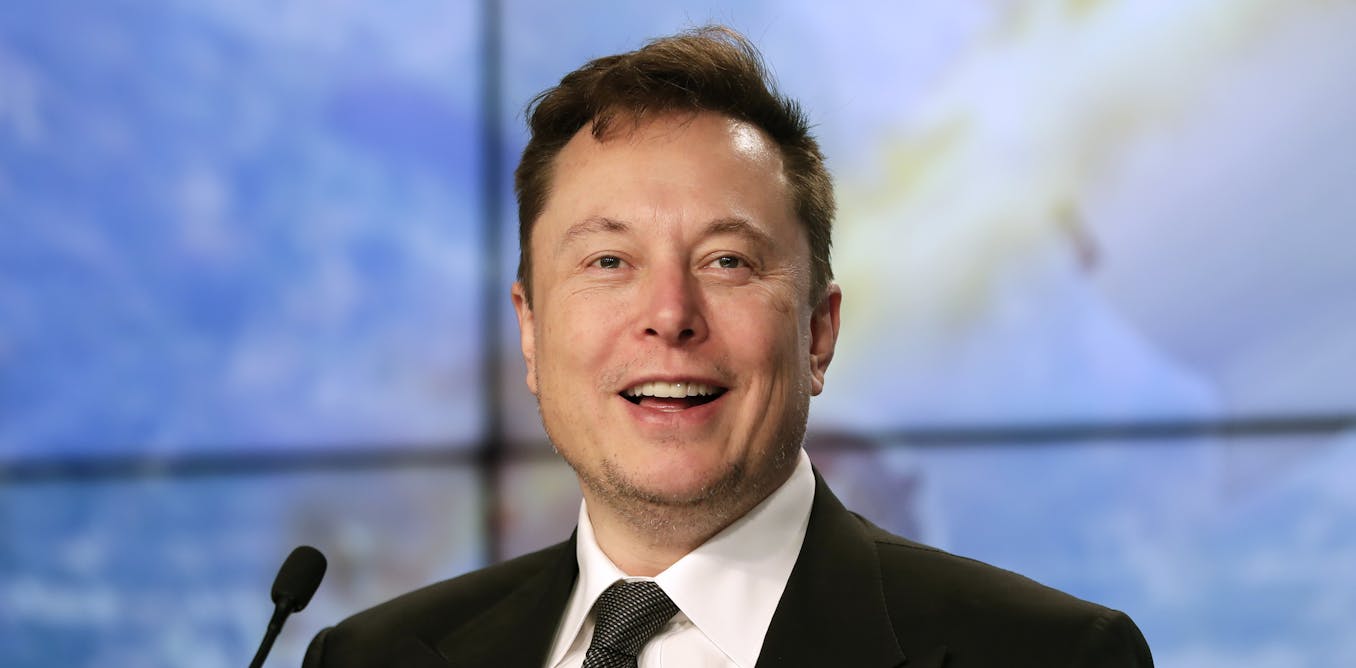
Billionaire, innovator and always the controversial CEO, Elon Musk scratched together over 40 billion dollars and has taken the reigns of social media giant Twitter.
But now that thew deed is done a lot of people have some concerns about Musk's intentions for the platform and its hundreds of thousands of users.
Will there be an edit button?
Will there finally be an end to 'bots'?
And what about moderation and free speech?
These are all valid and important questions to ask, and that's why Michigan State University's Anjana Susarla penned a recent piece in The Conversation to tackle those topics.
What lies ahead for Twitter will have people talking and reporters covering for the days and weeks to come. And if you're a journalist looking for insight and expert opinion then let us help with your stories.
Anjana Susarla is the Omura Saxena Professor of Responsible AI at Michigan State University. She's available to speak with media, simply click on her icon now to arrange an interview today.
·
1 min
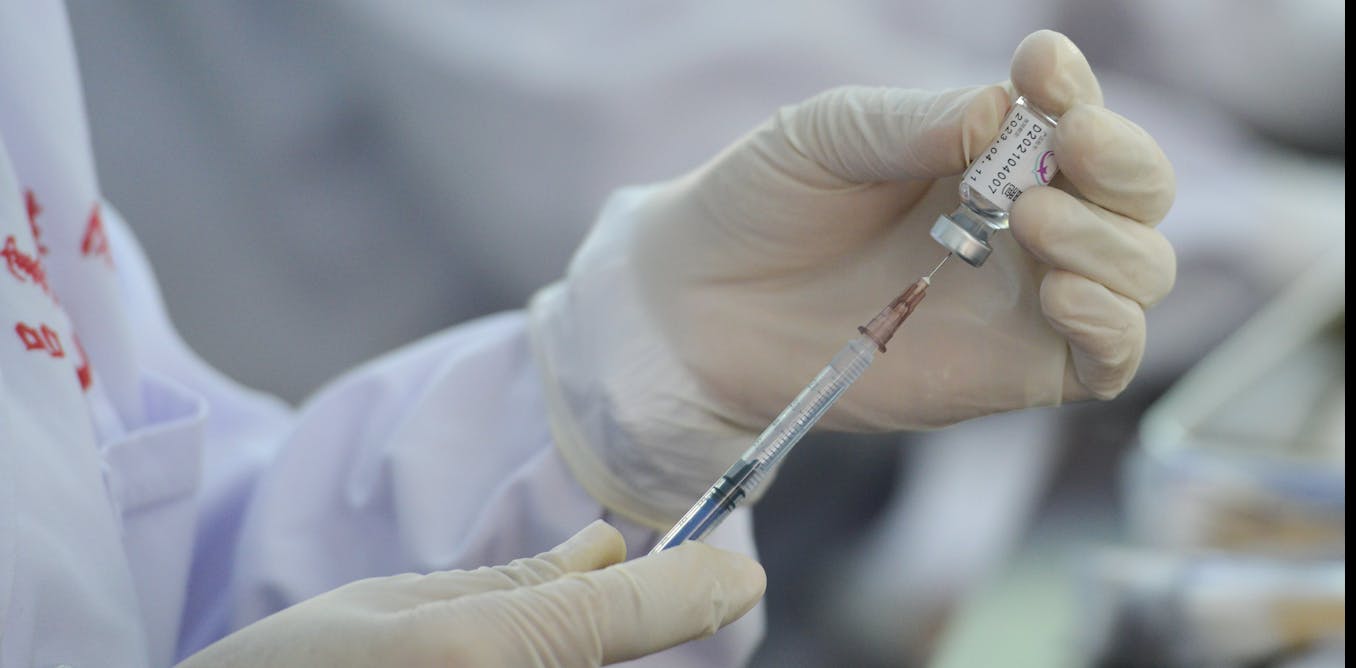
As America begins to stare down a fourth wave of COVID 19 – vaccine awareness and the debate about to get immunized or not is still a hot topic. And unfortunately, the level of misinformation being spread on social media is rampant.
Recently, MSU’s Anjana Susarla the Omura Saxena Professor of Responsible AI was featured in The Conversation in a piece titled ‘Big tech has a vaccine misinformation problem – here’s what a social media expert recommends’ . It’s a very compelling read and must have information for anyone looking at the threat of fake news and how quickly it can spread. As well, the article also highlights tactics n blocking sites and mitigating the spread of misinformation.
And if you are a journalist looking to know more about how big tech needs to keep up the fight against fake news – then let us help.
Anjana Susarla is the Omura Saxena Professor of Responsible AI at Michigan State University. She's available to speak with media, simply click on her icon now to arrange an interview today.
Media
Biography
Anjana Susarla earned an undergraduate degree in Mechanical Engineering from the Indian Institute of Technology, Chennai; a graduate degree in Business Administration from the Indian Institute of Management, Calcutta; and Ph.D. in Information Systems from the University of Texas at Austin. Her research interests include the economics of information systems, social media analytics and the economics of artificial intelligence. Her work has appeared in several academic journals and peer-reviewed conferences such as Academy of Management Conference, Conference on Knowledge Discovery and Data Mining, Conference on Neural Information Processing Systems (Neurips), Information Systems Research, International Conference in Information Systems, International Conference on Learning Representations (ICLR), Journal of Management Information Systems, Management Science and MIS Quarterly. She has served on and serves on the editorial boards of Information Systems Research and MIS Quarterly.
Anjana Susarla has received several awards for her research. She been a recipient of the William S. Livingston Award for Outstanding Graduate Students at the University of Texas, a Steven Schrader Best Paper Finalist at the Academy of Management, the Association of Information Systems Best Publication Award, a Runner-Up for Information Systems Research Best Published Paper Award and the Microsoft Prize by the International Network of Social Networks Analysis Sunbelt Conference. She has worked in consulting and led experiential projects with several companies. Her research has received grants and funding from several institutions including the National Library of Medicine.
Industry Expertise
Education/Learning
Social Media
Areas of Expertise
Responsible Artificial Intelligence (AI)
Digital Transformation
Social Media Analytics
Machine Learning
Causal Inference
Accomplishments
Best Publication Award, Association of Information Systems
2012
Runner-Up, Information Systems Research Best Published Paper Award
2012
Microsoft Prize, International Network of Social Networks Analysis Sunbelt Conference
2009
Steven Schrader Best Paper Finalist, Academy of Management Conference
2007
Nominated for Outstanding Dissertation Award, University of Texas
2004
Education
University of Texas at Austin
PhD
Management Information Systems
2003
Indian Institute of Management
MBA
Finance
1997
Indian Institute of Technology
B. Tech
Mechanical Engineering
1995
Affiliations
Member : Association of Information Systems, INFORMS
Big tech has a vaccine misinformation problem – here's what a social media expert recommends
The Conversation online
2021-07-29
This article was written by Anjana Susarla, Omura-Saxena Professor of Responsible AI at Michigan State University. With less than half the United States population fully vaccinated for COVID-19 and as the delta variant sweeps the nation, the U.S. surgeon general issued an advisory that called misinformation an urgent threat to public health. The advisory said efforts by social media companies to combat misinformation are “too little, too late and still don't go far enough.” The advisory came more than a year after the World Health Organization warned of a COVID-related “infodemic.”
How I Know Facebook Can’t Fix the Problems It Profits From
The Daily Beast online
2021-07-28
“Algorithms on social media platforms are primed for engagement. The anti-vaxxers know this and are very well organized to exploit the weaknesses of the engagement driven ecosystem on Big Tech platforms,” Anjana Susarla, Omura-Saxena Professor of Responsible AI at Michigan State University, told me. Specifically, these right-wing actors have discovered and exploited a “grey area” in Facebook’s content moderation to promote their attacks on vaccines and science. The phenomenon has been described as “lying through truth.”
Anyone with an iPhone can now make deepfakes. We aren’t ready for what happens next.
The Washington Post online
2021-03-25
All three of the latest free services say they’re mostly being used for positive purposes: satire, entertainment and historical re-creations. The problem is, we already know there are plenty of bad uses for deepfakes, too. “It’s all very cute when we do this with grandpa’s pictures,” says Michigan State University responsible-AI professor Anjana Susarla. “But you can take anyone’s picture from social media and make manipulated images of them. That’s what’s concerning.”
'It's a Worry That Big Tech Companies Have So Much Power Over the Information We Consume' - Analyst
Sputnik News online
2021-02-24
Australia’s Prime Minister Scott Morrison labelled Facebook's behaviour as "arrogant" adding that “they may be changing the world, but that doesn’t mean they run it.” The actions of the social network strengthened arguments for the need to challenge the monopoly power of tech giants and subject them to regulations.Sputnik spoke with Anjana Susarla, Omura-Saxena Professor of Responsible AI at Michigan State University, to hear her thoughts on government concerns over big tech monopolisation and if it is possible for social media giants like Facebook to self-regulate.
GameStop Has to Go Down But the Implications Are Strange
InvestorPlace online
2021-02-12
In an email to InvestorPlace Professor Susarla wrote: “My advice will be to disregard the HODL type of advice. Ultimately, large hedge funds have the institutional power to keep their positions open, unlike retail investors. Robinhood announced that it would automatically close some positions if it deems that a client is at risk of not having the necessary collateral… The other concern is that social media can be intentionally manipulated wherein we have a cycle of social media hype fueled investing that is not related to the market fundamentals.”
Anjana Susarla, an accounting and information systems professor at Michigan State University mentioned, “Part of the resurgence is coming from the fact that the pandemic has made companies realize the importance of investing in contactless technologies and greater automation. In China, for instance, driverless cars were used for disinfecting roads, driverless cleaning and disinfection vehicles for use within hospitals etc. Some airports have likewise installed autonomous disinfecting robotic vehicles. Some other applications are autonomous vehicles for contactless robot delivery systems for food delivery.”
Anjana Susarla, Martin Holzhacker, Ranjani Krishnan
2020
Interfirm contracts are plagued by opportunism arising from exchange hazards that increase the seller’s gains from holdup in fixed price contracts. These exchange hazards are higher when the seller can engage in unverifiable deliberate obfuscation. Although cost-plus contracts reduce holdup losses, they suffer from cost inefficiency. Past research has underscored the importance of trust as a control instrument to mitigate losses from exchange hazards, especially social relational trust that develops from past experiences. However, trust can also be calculative when it develops from the expectation of future economic gains to the buyer-seller dyad. We identify two dyadic mechanisms that generate calculative trust and curtail the likelihood of cost-inefficient behavior in cost-plus contracts. These mechanisms include future potential and bilateral reputation capital for cost containment. Analysis using probit estimations on 149 information technology outsourcing contracts for the period 1998 to 2005 suggests that calculative trust increases the likelihood of cost-plus contracts. Thus, calculative trust can mitigate inefficiencies in interfirm contracts.
No Pain, No Gain: Examining the Digital Resilience of the Fitness Sector During the COVID-19 Pandemic
SSRN
Uttara M Ananthakrishnan, Jenny Chen, Anjana Susarla
2020
The COVID-19 pandemic has had a negative impact on small businesses, substantially accelerating business failure and adversely affecting financial viability. With several sectors of the economy adopting digital transformation initiatives to deal with the pandemic, we consider digital resilience in the market for fitness clubs and gyms. The traditional economics of the fitness industry made them less vulnerable to digital disruption, pre pandemic. The pandemic also shifted patterns of human mobility, where gyms’ operating model was suddenly negatively impacted by digital substitution. We consider how these businesses adapted by being entrepreneurially alert and digitally agile in adopting virtualization and greater social media enabled connections with consumers, and how digitization substitutes for co-presence in the relationship between consumers and fitness centers. We examine these issues using a fairly granular data on foot traffic from Safegraph and combining it with data from Google Places, supplemented with hand collected data from individual websites.
Understanding Content Contribution Behavior in a Geosegmented Mobile Virtual Community: The Context of Waze
Information Systems Research
Chenhui Guo, Tae Hun Kim, Anjana Susarla, Vallabh Sambamurthy
2020
We examine content creation in a geosegmented, crowdsourced social mobile virtual community app, Waze. We conceptualize a virtual and spatial factor, virtual crowdedness (defined as the density of Waze users in a particular geospatial location), and we examine its role in encouraging user contribution. We posit that the relationship between virtual crowdedness and user contribution is driven by the tension between audience effects and bystander/content saturation effects. We analyze a panel data set of user contributions on Waze from New York City to test our hypotheses. First, our findings indicate that although virtual crowdedness has a positive influence on total number of contributions, the magnitude of the influence decreases as virtual crowdedness increases. Second, the concave-down increasing relationship is more pronounced for rush hours with high physical crowdedness than for non-rush hours with low physical crowdedness.
People Do Not Know What They Want Until You Show it to Them. But When?
SSRN
Mei Li, Xi Xiong, Xiangyu Chang, Anjana Susarla, Subodha Kumar
2021
Recommendation systems are critical tools for online retailers in their pursuit of enhanced operational performance and improved shopper experience. As such, firms invest heavily to improve their algorithms. Notwithstanding these efforts, there is usually a serious omission of demand-timing element in prevalent online recommendation systems. As a result, recommendations are often presented out of synchronization with the next demand cycle, leading to squandered marketing opportunities and customer dissatisfaction. In this research, we propose a novel demand-driven recommendation system that factors in predicted demand timing. The core of our novel design consists of a predictive model that forecasts product-level repurchase cycles for the online retail environment. We propose a new approach to incorporate the predicted repurchase cycles into three key recommendation generating stages: (i) \textit{retrieval}, (ii) \textit{ranking}, and (iii) \textit{re-ranking}.
Given the limited research into the impact of social media on offline sales of durable goods, this study examines the dynamic relationships between firm-generated content (FGC), user-generated content (UGC), traditional media, and offline light vehicle sales. Data were collected from the official Facebook and Twitter pages of 30 U.S. car brands from 2009 to 2015. We utilized a panel vector autoregressive model to investigate the dynamic relationships among multiple time series variables while controlling for influential durable goods characteristics. The empirical results suggest that Facebook and Twitter have heterogeneous effects on offline vehicle sales. Moreover, FGC is more effective than UGC for influencing offline light vehicle sales. Viral impressions from Facebook and Twitter are essential, although the effects vary by social media platform (Facebook versus Twitter) and content type (FGC versus UGC).