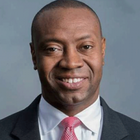
Georgia Athletic Association Distinguished Professor and Director, Atmospheric Sciences Program | Associate Dean UGA Franklin College of Arts and Sciences
Athens GA
A leading International expert on weather and climate frequently called upon by the White House, Congress, and national media.
In his most recent Forbes article, Dr. Marshall Shepherd takes a scientific look at why college students and fans storm football fields, blending insights from psychology, meteorology, and social dynamics. He explains that field-storming is not simply a burst of emotion—it’s a predictable outcome of collective excitement and shared identity. After an unexpected win or a high-stakes rivalry game, thousands of people simultaneously experience what psychologists call “emotional contagion,” amplifying feelings of unity and celebration. This shared surge, combined with environmental cues like stadium acoustics and crowd density, transforms the act into what Shepherd calls a form of “social weather event.”
“Storming the field isn’t chaos—it’s choreography fueled by emotion and crowd physics.” Shepherd also examines the logistical and safety implications. He notes that while universities often celebrate these spontaneous displays of school pride, they carry risks ranging from crowd injuries to property damage. Yet, institutions are reluctant to ban them outright because these moments reinforce fan loyalty and media attention. Shepherd suggests that the solution lies in better understanding crowd behavior: designing stadiums with safe egress routes, training security teams to manage surges, and anticipating emotional tipping points rather than reacting afterward.
“Understanding the science behind fan behavior lets us manage energy, not suppress it.” Ultimately, Shepherd’s piece reframes field-storming as a fascinating mix of culture and physics—where joy, identity, and momentum collide. He urges universities to see these moments not as mere rule-breaking but as opportunities to study human behavior in motion, and to design environments that celebrate passion without compromising safety.
Dr. J. Marshall Shepherd is a leading international weather-climate expert and is the Georgia Athletic Association Distinguished Professor of Geography and Atmospheric Sciences at the University of Georgia. Dr. Shepherd was the 2013 President of American Meteorological Society (AMS), the nation’s largest and oldest professional/science society in the atmospheric and related sciences. View his profile here Dr. J. Marshall Shepherd is available to speak with the media about this interesting topic simply click on his icon now to arrange an interview today.
·
1 min
In a September article featured in Forbes, Marshall Shepherd reports on a new tool launched by Project Drawdown that aims to deliver personalized climate-action strategies to different users—including policymakers, businesses, and individuals.
In the piece, he explains that the tool helps match context-specific emissions reduction or resilience options to the particular needs, geography, and capacities of the user, rather than prescribing one-size-fits-all solutions.
Shepherd also emphasizes that tools like this can help bridge the gap between climate science and real-world decision-making. He argues that equipping stakeholders with tailored pathways could accelerate uptake of effective interventions by making them more relevant, feasible, and compelling. Ultimately, Shepherd presents the new Drawdown resource as a promising model for democratizing access to climate solutions, enabling individuals and organizations to engage in strategies best suited to their specific circumstances.
Dr. J. Marshall Shepherd is a leading international weather-climate expert and is the Georgia Athletic Association Distinguished Professor of Geography and Atmospheric Sciences at the University of Georgia. Dr. Shepherd was the 2013 President of American Meteorological Society (AMS), the nation’s largest and oldest professional/science society in the atmospheric and related sciences. View his profile here Dr. J. Marshall Shepherd is a leading international weather-climate expert and is the Georgia Athletic Association Distinguished Professor of Geography and Atmospheric Sciences at the University of Georgia.
He's available to speak with the media about this topic simply click on his icon now to arrange an interview today.
·
2 min
In a recent Forbes article, Marshall Shepherd reflects on three key lessons he has drawn from the life and work of Dr. Jane Goodall. Shepherd frames Goodall’s legacy—spanning primatology, conservation, and public engagement—as deeply instructive for climate scientists and environmental advocates. He argues that her methods and mindset have more to teach than simply how to observe nature; they speak to how we engage with the world.
First, Shepherd highlights immersion: Goodall’s decades of patient observation in the Tanzanian forests demonstrates the power of being physically—and emotionally—present to truly learn from ecosystems. For Shepherd, climate science must go beyond remote data collection: getting into the field and understanding local realities matters. Second, he emphasizes patience. Goodall’s willingness to wait, sometimes for years, for breakthroughs in understanding primate behavior offers a lesson for climate researchers, whose progress may unfold over decades. Third, he admires her tenacity—a commitment sustained over a lifetime, even under adversity. Shepherd suggests that tackling climate change requires that same kind of enduring resolve, especially when public attention or funding waxes and wanes.
Through these reflections, Shepherd presents Goodall not just as an icon of conservation but as a model for scientific humility and perseverance. He invites readers to see the parallels between animal behavior research and climate work—and to adopt practices of listening, patience, and resolve in confronting our planet’s changing trajectory.
Dr. J. Marshall Shepherd is a leading international weather-climate expert and is the Georgia Athletic Association Distinguished Professor of Geography and Atmospheric Sciences at the University of Georgia. Dr. Shepherd was the 2013 President of American Meteorological Society (AMS), the nation’s largest and oldest professional/science society in the atmospheric and related sciences. View his profile here Dr. J. Marshall Shepherd is a leading international weather-climate expert and is the Georgia Athletic Association Distinguished Professor of Geography and Atmospheric Sciences at the University of Georgia.
He's available to speak with the media about this topic simply click on his icon now to arrange an interview today.
Media
Social
Biography
Dr. J. Marshall Shepherd is a leading international weather-climate expert and is the Georgia Athletic Association Distinguished Professor of Geography and Atmospheric Sciences at the University of Georgia. Dr. Shepherd was the 2013 President of American Meteorological Society (AMS), the nation’s largest and oldest professional/science society in the atmospheric and related sciences. Dr. Shepherd serves as Director of the University of Georgia’s (UGA) Atmospheric Sciences Program, the Associate Director of Climate and Outreach for the Institute for Resilient Infrastructure Systems, and Full Professor in the Department of Geography. In 2023, he was appointed Associate Dean for Research, Scholarship and Partnerships in the Franklin College of Arts and Sciences at the University of Georgia. His areas of research include urban climate, hydrometeorological extremes, weather-climate risk, and innovative outreach strategies.
In 2024, Dr. Shepherd received the National Academies’ Eric and Wendy Schmidt Award for Excellence in Science Communication and was honored with the American Association of Geographers Presidential Achievement Award. In 2023, he received the prestigious Environmental Law Institute Award. In 2023, Dr. Shepherd also moderated a discussion with Vice President Kamala Harris on climate change. He was selected as the 2022 Southeastern Conference (SEC) Professor of the Year following a historic accomplishment the previous year. In 2021, Dr. Shepherd was elected to the National Academy of Sciences, National Academy of Engineering, and the American Academy of Arts and Sciences.
Dr. Shepherd is frequently sought as an expert on weather, climate, and remote sensing. He is host of The Weather Channel’s Award-Winning Weather Geeks, Senior Contributor to Forbes Magazine and routinely appears on CBS Face The Nation, NOVA, The Today Show, CNN, and Fox News. His 3 TED Talks have nearly 3 million viewers, and he is also frequently asked to advise key leaders at NASA, the White House, Congress, Department of Defense, and officials from foreign countries. Dr. Shepherd has attracted several millions of dollars in extramural research support from NASA, National Science Foundation, Department of Energy, Defense Threat Reduction Agency, U.S. Forest Service and the Ray C. Anderson Foundation.
Areas of Expertise
Hurricane and Tropical Storms
Climate
Weather
Data Analysis
Climate Change
Remote Sensing
Media Appearances
2 Hour Lead Time For Tornadoes Is Possible But Do We Want It?
Forbes online
2025-05-08
We are in the peak of the U.S. severe weather season, and tornadic storms have been particularly prevalent this season. During my tenure in the meteorological field, one of the “holy grail” research challenges has been to improve tornado warning lead times. A NOAA research program has demonstrated that we may be able to give up to two hours of advance warning of a tornado. Here’s how it is possible as well as some thoughts on whether we want it.
Weather apps are a staple of life these days. Over the years, I have written several commentaries on their pros and cons. From my perspective as a meteorologist, the “cons” often outweigh the “pros,” but a new app is generating significant buzz. Here’s why.
Late-season tropical threat taking shape in the Caribbean, forecasts show
ABC News online
2024-11-14
"The conditions are definitely favorable for this storm to get its act together," Marshall Shepherd, director of the Atmospheric Sciences Program at the University of Georgia and former president of the American Meteorological Society, told ABC News.
"This is definitely a storm we've got to keep an eye on," Shepherd added.
Meteorologists Face Harassment and Death Threats Amid Hurricane Disinformation
The New York Times online
2024-10-14
“We’re all talking about how much more it’s ramped up,” said Marshall Shepherd, who is the director of the University of Georgia’s Atmospheric Sciences Program and a former president of the American Meteorological Society. There has been “a palpable difference in tone and aggression toward people in my field,” he said.
As Disinformation Swirls, Meteorologists Are Facing Threats
Yale Environment online
2024-10-24
Climate change skeptics have long accused weather forecasters of pushing what they view as a “climate change agenda,” Shepherd said. But things took an ugly turn this month when conspiracy theorists denounced scientists for covering up a supposed government plot to engineer the weather and send storms to Florida and North Carolina. “In the past, the harassment was over in a fringe element,” Shepherd, a former president of the American Meteorological Society, said in an interview with Yale Environment 360. “In this last episode, it was bit more mainstream.”
The Bullying Of Meteorologists During Hurricanes Helene And Milton
Forbes online
2024-10-12
Bullying of meteorologists is sadly not new. Women in the TV sector of our field deal with misogynistic comments about their attire, hair or looks. Broadcasters face backlash if they interrupt a televised golf tournament or movie to warn the public about impending weather threats. The weather community also faces constant scrutiny about the accuracy of forecasts, though most of those narratives are based on perception rather than facts. Climate scientists are also targeted by special interests, trolls and bots. During Hurricanes Helene and Milton, I noticed an even darker tone to the bullying.
I’m an atmospheric scientist. People do not control hurricanes.
AJC online
2024-10-11
Meteorological fall starts on the first of September. Fall is one of my favorite times of year. It brings crisp air and college football (Go Dawgs!).
The big negative is that it also represents the most active part of the Atlantic hurricane season. Though hurricane season kicks off on June 1, activity usually ramps up in August and peaks in the second week of September. Complex physics related to specific heat explain the lag between the start of the season and its peak, but I won’t bore you with a physics lesson.
5 Things To Watch For With Future Hurricane Helene
Forbes online
2024-09-24
The tropical system that will almost certainly become Hurricane Helene is organizing in the tropics. By Tuesday evening, it will make its way toward the Gulf of Mexico with Florida as its target. If you live along the eastern Gulf of Mexico and inland, alert levels should be high. Here are five things to watch for with future Hurricane Helene over the course of its lifecycle.
Can We Expect More Flooding and Extreme Weather Because of Climate Change?
Popular Mechanics online
2023-10-09
Sometimes people think a warming climate means more storms, but that’s not exactly true, climate scientist James Marshall Shepherd, a professor at the University of Georgia and director of its Atmospheric Sciences Program, tells Popular Mechanics. Instead, the storms we do experience will be stronger, creating more dire episodes like the one in Libya. Marshall’s research focuses on using remote sensing and modeling to study climate and extreme weather risks.
Effect of cities on rainfall and the implications for drainage design
2004 | World Water and Environmental Resources Congress
Urban effects on rainfall variability: Potential implications for Georgia’s water supply
2009 | Proceedings of the Georgia Water Resources Conference
Research Grants
Engineering With Nature ® Initiative
US Department of Army
05/01/2020-04/30/2023
Cooperative Institute for Satellite Earth System Studies (CISESS)
NOAA
UGA PI
Towards Conceptualization and Predictability: A Multi-scalar Analysis of Urban-Influenced Hydrometeorological Processes
NASA
07/01/19-06/30/24
Towards Conceptualization and Predictability: A Multi-scalar Analysis of Urban-Influenced Hydrometeorological Processes
NASA
PI
Cooperative Institute for Satellite Earth System Studies (CISESS)
NOAA
07/01/2018-6/30/21
Advancing Sustainable Poultry Production through Climate-Smart Farming Practices and Large Animal Phenotyping Foundation Models.
UGA Institute for Integrative Precision Agriculture
Co-PI
Installation Multi-Natural Hazards Risk Assessments under a Changing Climatic Conditions
U.S. Navy
Co-PI
Establishing the Research and Education Programs on Convergent Safety Science and Engineering at UGA
UGA OIR Teaming for Interdisciplinary Research Pre-Seed Program
Co-PI
Rubber-Modified Asphalt- A Potential Urban Heat Island Mitigation Strategy
UGA Presidential Interdisciplinary Seed Grant
PI
Incorporating Principles of Environmental Justice into Forecast Informed Reservoir Operations, a Climate and Flood Adaptation Strategy
NOAA
Co-PI
Investigating the Role of Land-Surface Conditions on Landfalling Tropical
NOAA
Cyclones and the Preceding Processes that Influence Antecedent Soil Moisture and Temperature on S2S Timescales. Co-PI.
Education
Florida State University
B.S.
Physical Meteorology
Florida State University
M.S.
Physical Meteorology
Florida State University
Ph.D.
Physical Meteorology
Published Works
A Review of Current Investigations of Urban-Induced Rainfall and Recommendations for the Future
Earth Interactions
2005-07-01
Precipitation is a key link in the global water cycle and a proxy for changing climate; therefore, proper assessment of the urban environment’s impact on precipitation (land use, aerosols, thermal properties) will be increasingly important in ongoing climate diagnostics and prediction, Global Water and Energy Cycle (GWEC) analysis and modeling, weather forecasting, freshwater resource management, urban planning–design, and land–atmosphere–ocean interface processes. These facts are particularly critical if current projections for global urban growth are accurate.
Quantifying the contribution of tropical cyclones to extreme rainfall along the coastal southeastern United States
Geophysical Research Letters
2007-12-16
Analysis of a unique satellite precipitation dataset coupled with an extensive database of storm tracks are used to develop a parameter called the “millimeter-day (MD).” MD analysis in 4 mini-basins near coastal southeastern United States reveals that September and October account for the largest number of extreme rainfall days (e.g. “wet millimeter-days” or MD > 0) during the 1998–2006 Atlantic hurricane seasons.
A global spatiotemporal analysis of inland tropical cyclone maintenance or intensification
International Journal of Climatology
2014-02-01
Forecasting tropical cyclone ( TC) intensity changes over land is complicated by interactions of various surface and atmospheric features. Due to generally unfavorable conditions, many TCs weaken and decay soon after landfall. In some cases, TCs may also transition to extratropical cyclones (ETs). Despite the absence of oceanic forcing, a number of TCs have been observed to maintain or increase strength inland, termed 'tropical cyclone maintenance or intensification' (TCMIs). This study identifies the environments and characteristic features of TCMIs and explores physical processes that may help to produce an atmosphere conducive for tropical systems.
The Curious Relationship Between COVID-19 Lockdowns and Urban Heat Islands
Geophysical Research Letters
2022-03-26
The COVID-19 pandemic has been a life-altering shock to society. However, there have been serendipitous outcomes from the associated lockdowns ranging from improved air quality to reductions in carbon emissions. Liu et al. (2022, https://doi.org/10.1029/2021GL096842) revealed that even the magnitude of the heat islands in Chinese cities were reduced due to a decline in human activities and their associated anthropogenic contributions. These surprising findings have significant implications for understanding intersections among climate, health, energy, urban planning, transportation, and infrastructure.
Global scale assessment of urban precipitation anomalies
Proc. of National Acad. of Sciences
2024-09-29
Urbanization has accelerated dramatically across the world over the past decades. Urban influence on surface temperatures is now being considered as a correction term in climatological datasets. Although prior research has investigated urban influences on precipitation for specific cities or selected thunderstorm cases, a comprehensive examination of urban precipitation anomalies on a global scale remains limited. This research is a global analysis of urban precipitation anomalies for over one thousand cities worldwide.
National Academies of Sciences, Engineering, and Medicine
2024-06-25
Establish your scientific credentials, and then allow everything to flow from that expertise. So advised my valuable mentor, Dr. Warren Washington, a recipient of the Presidential Medal of Science who resides on the Mount Rushmore of my career influences, when I was a young scholar. I sensed concern in Dr. Washington’s tone. As a fellow African American scientist, Dr. Washington understood the lack of representation within the atmospheric sciences.
Cultivating Trust. Contribution - For a More Competitive US Research Enterprise, the Work Begins Now
Issues in Science and Technology
2024-09-02
Cultivating trust in science requires commitment to the same basic principles that make strong leaders: authenticity, empathy, and logic. Though scholars are taught to be good researchers steeped in theory, methods, and scholarly reporting, I continually advocate for a more evolved approach in training the next generation of scientists, with the recognition that they will become the next generation of science leaders.
Impacts of Urbanization on Precipitation and Storms: Physical Insights and Vulnerabilities
Climate Vulnerability
2013-03-15
Climate change has been the subject of thousands of books and magazines, scientific journals, and newspaper articles daily. It’s a subject that can be very political and emotional, often blurring the lines between fact and fiction. The vast majority of research, studies, projections and recommendations tend to focus on the human influence on climate change and global warming as the result of CO2 emissions, often to the exclusion of other threats that include population growth and the stress placed on energy sources due to emerging global affluence.
Compounding Disasters in Gulf Coast Communities 2020-2021
National Academies of Sciences, Engineering, and Medicine
Experiencing a single disaster - a hurricane, tornado, flood, severe winter storm, or a global pandemic - can wreak havoc on the lives and livelihoods of individuals, families, communities and entire regions. For many people who live in communities in the U.S. Gulf of Mexico region, the reality of disaster is starker. Endemic socioeconomic and health disparities have made many living in Gulf of Mexico communities particularly vulnerable to the effects of weather-climate hazards.
Advancing Risk Communication with Decision-Makers for Extreme Tropical Cyclones and Other Atypical Climate Events
National Academies of Sciences, Engineering, and Medicine
2025-06-01
Atypical weather events, such as extreme tropical cyclones, pose substantial threats to life, property and livelihoods in the U.S. and worldwide. Despite major advances in forecasting capabilities, communicating about extreme weather events with decision-makers and the public carries considerable challenges but also provides opportunities for innovation.