1 min
ddddddd
sdf

Jun 5, 2025
7 min
Google's recent rollout of AI Overviews (previously called “Search Generative Experience”) at its annual developer conference is being hailed as the biggest transformation in search since the company was founded.
This isn’t a side project for Google — it fundamentally alters how content gets discovered, consumed, and valued online. If you're in marketing, PR, content strategy, or run a business that depends on online visibility, this requires a fundamental shift in your thinking.
Instead of showing users a familiar list of blue links and snippets, Google now uses artificial intelligence to generate a summary answer at the very top of many search results pages. This AI-generated box pulls together content from across the web and tries to answer the user’s question instantly—without requiring them to click through to individual websites.
Here’s what that looks like:
You type in a question like “What are the best strategies for handling a media crisis?”
Instead of just links, you see a big AI-generated paragraph with summarized strategies, possibly quoting or linking to 3-5 sources—some of which might not even be visible unless you scroll or expand the summary. Welcome to the new digital gatekeeper.
Elizabeth Reid, VP of Search at Google states "Our new Gemini model customized for Google Search brings together Gemini’s advanced capabilities — including multi-step reasoning, planning and multimodality — with our best-in-class Search systems.
Let's breakdown this technobabble.
Think of Gemini as the brain behind Google’s search engine that’s now:
Even More Focused on User intent
For years, SEO strategies were built around guessing and gaming the right keywords: “What exact phrase are people typing into Google?” That approach led to over-optimized content — pages stuffed with phrases like “best expert speaker Boston cleantech” — written more for algorithms than actual humans. But with Google Gemini and other AI models now interpreting search queries like a smart research assistant, the game has changed entirely. Google is no longer just matching phrases — it’s interpreting what the user wants to do and why they’re asking.
Here’s What That Looks Like:
Let’s say someone searches:
“How do I find a reputable expert on fusion energy who can speak at our cleantech summit?”
In the old system, pages that mentioned “renewable energy,” “expert,” and “speaker” might rank — regardless of whether they actually helped the user solve their problem.
Now Google more intuitively understands:
• The user wants to evaluate credibility
• The user is planning an event
• The user needs someone available to speak
• The context is likely professional or academic
If your page simply has the right keywords but doesn’t send the right signals — you’re invisible.
Able to plan ahead
Google and AI search platforms now go beyond just grabbing facts. They string together pieces of information to answer more complex, multi-step queries. In traditional search, users ask one simple question at a time. But with multi-step queries, users are increasingly expecting one search to handle a series of related questions or tasks all at once — and now Google can actually follow along and reason through those steps. So imagine you’re planning a conference. A traditional search might look like:
"Best conference venues in Boston”
But a multi-step query might be:
“Find a conference venue in Boston with breakout rooms, check availability in October, and suggest nearby hotels with group rates.”
This used to require three or four different searches, and you’d piece it together yourself.
Now Google can handle that entire chain of related tasks, plan the steps behind the scenes, and return a highly curated answer — often pulling from multiple sources of structured and unstructured data.
Even Better at understanding context
Google now gets the difference between ‘a speaker at a conference’ and ‘a Bluetooth speaker’ — because it understands what you mean, not just what you type.” In the past, Google would match keywords literally. If your page had the word “speaker,” it might rank for anything from event keynotes to audio gear. That’s why so many search results felt off or required extra digging.
Now Google reads between the lines. It understands that “conference speaker” likely refers to a person who gives talks, possibly with credentials, experience, and a bio. And that “Bluetooth speaker” is a product someone might want to compare or buy.
Why this matters for marketers: If you’re relying on vague or generic content — or just “keyword-stuffing” — your pages will fall flat. Google is no longer fooled by superficial matches. It wants depth, clarity, and specificity.
Reads More Than Just Text
Google now processes images, videos, charts, infographics, and even audio — and uses that multimedia information to answer search queries more completely. This now means that your content isn’t just being read like a document — it’s being watched, listened to, and interpreted like a human would.
For example:
• A chart showing rising enrollment in nursing programs might get picked up as supporting evidence for a story about healthcare education trends.
• A YouTube video of your CEO speaking at a conference might be indexed as proof of thought leadership.
• An infographic explaining how your service works could surface in an AI-generated summary — even if the keyword isn’t mentioned directly in text.
Ignoring multimedia formats? Then, your competitors’ visual storytelling could be outperforming your plain content. Because you're not giving Google the kind of layered, helpful content that Gemini is now designed to highlight.
There's a big risk here. Marketers who ignore these developments are in danger of becoming invisible in search.
Your old SEO tricks won’t work.
Your content won’t appear in AI summaries.
Your organization won’t be discovered by journalists, customers, or partners who now rely on smarter search results to make decisions faster.
If you’re in communications, PR, media relations, or digital marketing, here’s the key message.
You are no longer just fighting for links. You need to fight to be included in the Google AI summary itself at the top of search results - that's the new #1 goal. Why?
Journalists can now find their answers before ever clicking on your beautifully written news page.
Prospective students, donors, and customers will often just see the AI’s version of your content.
Your brand’s visibility now hinges on being seen as “AI-quotable.”
If your organization isn’t optimized for this new AI-driven landscape, you risk becoming invisible at the very moment people are searching for what you offer.
This isn’t just an IT or SEO problem. It’s a communications strategy opportunity—and you are central to the solution.
What You Can Do Now to Prepare for AI Overviews
1. Get Familiar with How AI “Reads” Your Content
AI Overviews pull content from websites that are structured clearly, written credibly, and explain things in simple language.
Action Items: Review your existing content: Is it jargon-heavy? Outdated? Lacking expert quotes or explanations? Then, it's time to clean house.
2. Collaborate with your SEO and Web Teams
Communicators and content creators now need to work hand-in-hand with technical teams.
Action Items: Check your pages to see if you are using proper schema markup. Are you creating topic pages that explain complex ideas in simple, scannable formats?
3. Showcase Human Expertise
AI values content backed by real people—especially experts with credentials.
Action Items: Make sure your expert profiles are up to date. Make sure you continue to enhance them with posts, links to media coverage, short videos, images and infographics that highlight the voices behind your brand and make you stand out in search.
4. Don’t Just Publish—Package
AI favors content that it can easily digest and display such as summary paragraphs, FAQs, and bold headers that provide structure for search engines. This also makes your content more scannable and engaging to humans.
Action Items: Repurpose your best content into AI-friendly formats: think structured lists, how-tos, and definitions.
5. Monitor Your Presence in AI Overviews
Regularly search key topics related to your organization and see what shows up.
Action Items: Is your content featured? If not, whose is—and identify what they doing differently.
This isn’t the end of communications as we know it—it’s an evolution. Your role now includes helping your organization communicate clearly to machines as well as to people.
Think of it as “PR for the algorithm.” You’re not just managing narratives for the public—you’re shaping what AI systems say about you and your brand.
That means:
• Ensuring your best ideas and experts are front and center online.
• Making complex information simple and quotable.
• Collaborating cross-functionally like never before.
Google’s new AI Overviews are here. They’re not a beta test. This is the future of search, and it’s already rolling out.
If your institution, company, or nonprofit wants to be discovered, trusted, and quoted, you can no longer afford to ignore how AI interprets your online presence.
Communications and media professionals are now at the front lines of discoverability. And the best way to lead is to act now, work collaboratively, and elevate your role in this new era of search.
Want to see how leading organizations are getting ahead in the age of AI search?
Discover how ExpertFile is helping corporations, universities, healthcare institutions and industry associations transform their knowledge into AI-optimized assets — boosting visibility, credibility, and media reach. Get your free download of our app at www.expertfile.com

1 min
sdf
2 min
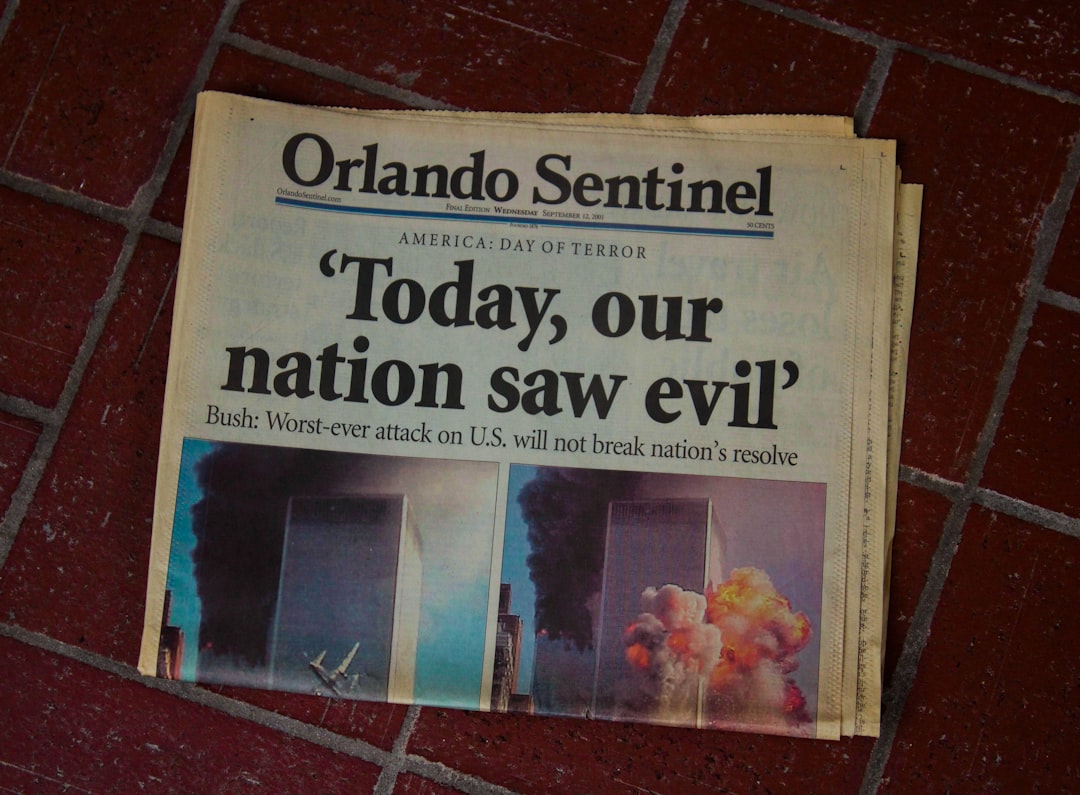
September 11, 2001 marked a pivot in American history—a day when the nation’s sense of safety was shattered, and its collective identity reshaped. The attacks triggered sweeping changes in security, government authority, social behavior, and even cultural cohesion. Today, the legacy of 9/11 lives on in how we remember, govern, and connect. A Nation in Shock—and Unity On that fall morning, the U.S. witnessed a tragedy that killed nearly 3,000 people and devastated the nation’s psyche. In the immediate aftermath, grief turned into solidarity—as most Americans tuned into televised coverage, felt sadness, anger, and fear, yet paradoxically came together in an extraordinary show of patriotism and trust in institutions. In the months that followed, confidence in government reached levels unseen in decades—fueled by mourning, resolve, and a collective desire to heal. The Rise of “Homeland Security” & Executive Power Almost immediately, the U.S. government unleashed legal and structural transformations. The USA PATRIOT Act, passed just weeks later in October 2001, significantly expanded surveillance and law enforcement powers for domestic security—raising ongoing concerns about civil liberties. Alongside this, the Department of Homeland Security was created in 2002, bringing together 22 agencies to coordinate security against future threats and reinforcing a new era of national vigilance. Economic Shock and Air Travel Overhaul The attacks triggered immediate economic consequences: U.S. stock markets plunged, airlines and insurers suffered heavy losses, and GDP forecasts were revised downward. Meanwhile, the aviation sector underwent a rapid and lasting modernization in security protocols and flight routing. Notably, Canada’s Operation Yellow Ribbon absorbed diverted flights in the chaos, highlighting international cooperation amid crisis. Legal Precedents and Global Conflict Congress quickly approved the broad-ranging Authorization for Use of Military Force (AUMF), enabling the U.S. to pursue adversaries globally—a mandate that has since been interpreted far beyond its original context, shaping nearly two decades of “forever wars.” These legal expansions—and the accompanying conflicts in Afghanistan and Iraq—signaled a new global posture that redefined American foreign policy. Remembering, Serving, and the Legacy Continues In the years since, public memory of 9/11 has evolved—from solemn remembrance to proactive service. Patriot Day, proclaimed a national day of mourning and service, now encourages millions of Americans each year to volunteer in honor of those lost and the unity felt afterward. These acts of service continue to reflect the enduring spirit of resilience and community. Connect with our experts on the history, significance, and lasting impact of 9/11 on American life and policy. Check out our experts here : www.expertfile.com
2 min
From its modest beginnings in the late 19th century to becoming America’s most-watched sport, professional football has not only entertained generations but also transformed communities, economies, and culture. Today, the National Football League (NFL) stands as a global brand, symbolizing both the triumphs and tensions of American life. Early Beginnings Professional football took root in the 1890s, when athletic clubs in Pennsylvania began paying players under the table. In 1920, a group of teams formed the American Professional Football Association, later renamed the NFL in 1922. Early decades were marked by instability, but the league grew steadily, and by the 1950s, with the rise of television, football began capturing national attention. The 1958 NFL Championship Game—dubbed the “Greatest Game Ever Played”—cemented football as America’s sport of the future, setting the stage for the AFL-NFL rivalry of the 1960s and the eventual Super Bowl, first played in 1967. Economic Impact Football is now one of the most powerful economic engines in American sports. The NFL generates more than $18 billion annually, with billions flowing into local economies through stadium construction, tourism, and broadcasting rights. Super Bowl weekend alone can inject hundreds of millions of dollars into host cities. The game has also reshaped industries—from sports broadcasting and advertising to fantasy leagues and legalized sports betting. It drives sponsorships, merchandise sales, and jobs connected to media, hospitality, and infrastructure. Social and Cultural Significance Football’s reach extends beyond the field. It has served as a stage for some of America’s most important social conversations—from racial integration in the 1940s, to gender roles in sports media, to the modern debates over player safety and activism. Figures like Jackie Robinson in baseball broke barriers, but in football, trailblazers such as Kenny Washington (first African American to reintegrate the NFL in 1946) helped reshape opportunity and inclusion. In more recent years, high-profile advocacy by players on issues ranging from racial justice to mental health has placed the sport squarely in the middle of national debates. At the same time, concerns about concussions and long-term health risks have fueled public dialogue on workplace safety and medical ethics, echoing issues seen across many industries. A Lasting Legacy Football is more than a game. It has become a unifying tradition—whether through Friday night lights in small towns, college rivalries that galvanize entire states, or Super Bowl Sunday as an unofficial national holiday. Its economic and cultural significance continues to expand, reflecting both America’s passion for competition and its ongoing social evolution. Connect with our experts about the history and significance of professional football in America: Check out our experts here : www.expertfile.com
Check out some other posts from ExpertFile
1 min
sdf
2 min
September 11, 2001 marked a pivot in American history—a day when the nation’s sense of safety was shattered, and its collective identity reshaped. The attacks triggered sweeping changes in security, government authority, social behavior, and even cultural cohesion. Today, the legacy of 9/11 lives on in how we remember, govern, and connect. A Nation in Shock—and Unity On that fall morning, the U.S. witnessed a tragedy that killed nearly 3,000 people and devastated the nation’s psyche. In the immediate aftermath, grief turned into solidarity—as most Americans tuned into televised coverage, felt sadness, anger, and fear, yet paradoxically came together in an extraordinary show of patriotism and trust in institutions. In the months that followed, confidence in government reached levels unseen in decades—fueled by mourning, resolve, and a collective desire to heal. The Rise of “Homeland Security” & Executive Power Almost immediately, the U.S. government unleashed legal and structural transformations. The USA PATRIOT Act, passed just weeks later in October 2001, significantly expanded surveillance and law enforcement powers for domestic security—raising ongoing concerns about civil liberties. Alongside this, the Department of Homeland Security was created in 2002, bringing together 22 agencies to coordinate security against future threats and reinforcing a new era of national vigilance. Economic Shock and Air Travel Overhaul The attacks triggered immediate economic consequences: U.S. stock markets plunged, airlines and insurers suffered heavy losses, and GDP forecasts were revised downward. Meanwhile, the aviation sector underwent a rapid and lasting modernization in security protocols and flight routing. Notably, Canada’s Operation Yellow Ribbon absorbed diverted flights in the chaos, highlighting international cooperation amid crisis. Legal Precedents and Global Conflict Congress quickly approved the broad-ranging Authorization for Use of Military Force (AUMF), enabling the U.S. to pursue adversaries globally—a mandate that has since been interpreted far beyond its original context, shaping nearly two decades of “forever wars.” These legal expansions—and the accompanying conflicts in Afghanistan and Iraq—signaled a new global posture that redefined American foreign policy. Remembering, Serving, and the Legacy Continues In the years since, public memory of 9/11 has evolved—from solemn remembrance to proactive service. Patriot Day, proclaimed a national day of mourning and service, now encourages millions of Americans each year to volunteer in honor of those lost and the unity felt afterward. These acts of service continue to reflect the enduring spirit of resilience and community. Connect with our experts on the history, significance, and lasting impact of 9/11 on American life and policy. Check out our experts here : www.expertfile.com

2 min
From its modest beginnings in the late 19th century to becoming America’s most-watched sport, professional football has not only entertained generations but also transformed communities, economies, and culture. Today, the National Football League (NFL) stands as a global brand, symbolizing both the triumphs and tensions of American life. Early Beginnings Professional football took root in the 1890s, when athletic clubs in Pennsylvania began paying players under the table. In 1920, a group of teams formed the American Professional Football Association, later renamed the NFL in 1922. Early decades were marked by instability, but the league grew steadily, and by the 1950s, with the rise of television, football began capturing national attention. The 1958 NFL Championship Game—dubbed the “Greatest Game Ever Played”—cemented football as America’s sport of the future, setting the stage for the AFL-NFL rivalry of the 1960s and the eventual Super Bowl, first played in 1967. Economic Impact Football is now one of the most powerful economic engines in American sports. The NFL generates more than $18 billion annually, with billions flowing into local economies through stadium construction, tourism, and broadcasting rights. Super Bowl weekend alone can inject hundreds of millions of dollars into host cities. The game has also reshaped industries—from sports broadcasting and advertising to fantasy leagues and legalized sports betting. It drives sponsorships, merchandise sales, and jobs connected to media, hospitality, and infrastructure. Social and Cultural Significance Football’s reach extends beyond the field. It has served as a stage for some of America’s most important social conversations—from racial integration in the 1940s, to gender roles in sports media, to the modern debates over player safety and activism. Figures like Jackie Robinson in baseball broke barriers, but in football, trailblazers such as Kenny Washington (first African American to reintegrate the NFL in 1946) helped reshape opportunity and inclusion. In more recent years, high-profile advocacy by players on issues ranging from racial justice to mental health has placed the sport squarely in the middle of national debates. At the same time, concerns about concussions and long-term health risks have fueled public dialogue on workplace safety and medical ethics, echoing issues seen across many industries. A Lasting Legacy Football is more than a game. It has become a unifying tradition—whether through Friday night lights in small towns, college rivalries that galvanize entire states, or Super Bowl Sunday as an unofficial national holiday. Its economic and cultural significance continues to expand, reflecting both America’s passion for competition and its ongoing social evolution. Connect with our experts about the history and significance of professional football in America: Check out our experts here : www.expertfile.com