ChristianaCare Becomes First in Delaware to Offer CAR-T Therapy for Advanced Multiple Myeloma

New treatment gives patients a powerful new option when other therapies stop working

Jun 5, 2025

3 min

Thomas Schwaab, M.D., PH.D.

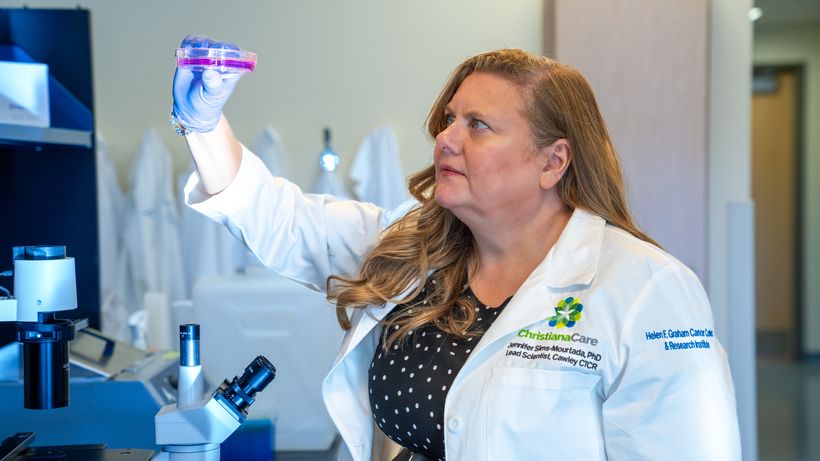
ChristianaCare’s Helen F. Graham Cancer Center & Research Institute is the first in Delaware to offer a powerful new tool in the fight against multiple myeloma—a type of blood cancer that affects plasma cells in the bone marrow. That tool is a new chimeric antigen receptor (CAR) T-cell therapy, called CARVYKTI, which can improve treatment for adults with multiple myeloma that has returned or stopped responding to other treatments.


“CAR-T cell therapy represents a paradigm shift in the treatment of multiple myeloma,” said Thomas Schwaab, M.D., Ph.D., Bank of America Endowed Medical Director of the Helen F. Graham Cancer Center & Research Institute." We are expanding access to this life-extending therapy right here in Delaware — close to home, close to hope. This is part of our ongoing commitment at the Graham Cancer Center to ensure our community has access to the most advanced cancer therapies.”


Multiple myeloma is a relatively rare cancer, but it still affects a significant number of people each year. In the United States, it is estimated that around 36,110 new cases will be diagnosed in 2025, according to the American Cancer Society


What is CAR-T Therapy?


CAR-T cell therapy uses a patient’s own immune cells to fight cancer. Doctors first collect the patient’s T cells, which are a type of white blood cell that helps the body fight infections. In the lab, these T cells are reprogrammed by adding a special receptor called a chimeric antigen receptor (CAR). This receptor allows the T cells to recognize specific proteins on cancer cells, acting like a navigation system to help the T cells find and attack the cancer.


After this genetic modification, the reprogrammed T cells are expanded in the lab to create a larger army of cancer-fighting cells. Then, they are infused back into the patient’s body, where they go on to find and destroy the cancer cells. This therapy is approved for adults who have already tried several standard treatments, like proteasome inhibitors, immunomodulators and anti-CD38 antibodies, without success. When those treatments stop working, CARVYKTI can offer a powerful new option.


CAR T-cell therapy has given new hope to patients with multiple myeloma whose cancer has returned or stopped responding to other treatments. Many people see their cancer shrink or even disappear for a period of time, which can help them live longer and feel better. While the treatment can have short-term side effects, many patients report feeling stronger and having fewer symptoms once they recover. It’s not a cure, but for some, it can mean more time with loved ones and a better quality of life.


“This therapy gives our patients a chance when other treatments have failed,” said Zhifu Xiang, M.D., medical oncologist at ChristianaCare Oncology Hematology. “It’s a deeply personalized approach that uses the patient’s own immune system to fight the cancer in a powerful new way. Being able to offer this locally means our patients don’t have to travel far for world-class care.”


A Leader in Cell Therapy


The Graham Cancer Center’s dedicated team of specialists have been offering CAR-T cell therapy for other cancer types, such as lymphoma and leukemia, since 2018. The center is also recognized by the Foundation for the Accreditation of Cellular Therapy (FACT) for meeting the highest standards in safety, quality and patient care.


To learn more about CAR-T cell therapy or other cancer treatments at ChristianaCare, visit christianacare.org/cancer or call the Helen F. Graham Cancer Center & Research Institute at 302-733-HOPE (4673).


Connect with:
Thomas Schwaab, M.D., PH.D.

Thomas Schwaab, M.D., PH.D.

Bank of America Endowed Medical Director, Helen F. Graham Cancer Center & Research Institute

Nationally recognized urologic surgeon and leader of strategic development

ImmunologyTranslational Cancer ResearchUrologic OncologyBusiness Development
Powered by

You might also like...

Check out some other posts from ChristianaCare

CorriXR Launches Bold Collaboration to Create First Inhaled CRISPR Therapy for Lung Cancer featured image

3 min

CorriXR Launches Bold Collaboration to Create First Inhaled CRISPR Therapy for Lung Cancer

CorriXR Therapeutics, ChristianaCare’s first commercial biotherapeutics spinout, has launched a major collaboration with InhaTarget Therapeutics and Merxin Ltd to develop an inhaled genetic therapy for lung cancer. The goal is to deliver a CRISPR-based treatment straight to tumors in the lungs to improve effectiveness and cut harmful side effects. A New Way to Treat Lung Cancer Lung cancer remains one of the deadliest cancers worldwide. Squamous cell lung carcinoma, an aggressive form of non-small cell lung cancer, accounts for up to 30% of cases. More than 380,000 people are diagnosed each year, yet the five-year survival rate stays under 15%. Standard chemotherapy and immunotherapy often become less effective, and many patients develop resistance that leaves them with few options and rising toxicity. CorriXR is taking aim at this problem. Its CRISPR gene editing system targets NRF2, a key driver of treatment resistance. By switching off NRF2, the therapy has the potential to make tumors sensitive to chemotherapy again and give patients a chance at better outcomes. As reported in a recent paper in Molecular Therapy Oncology, researchers at ChristianaCare’s Gene Editing Institute showed in preclinical lung cancer models that disabling NRF2 can resensitize tumors to chemotherapy with minimal off-target effects. “This partnership is about more than science. It’s about hope for patients,” said Eric Kmiec, Ph.D., founder and CEO of CorriXR Therapeutics and chief scientific officer at ChristianaCare’s Gene Editing Institute. “Lung cancer patients deserve therapies that work and improve quality of life. By combining our CRISPR-based technology with inhaled delivery, we can target tumors directly and reduce systemic toxicity. Our goal is to make treatment simpler, more effective and less invasive.” How the Inhaled Delivery System Works The treatment will be given through inhalation using InhaTarget’s lipid nanoparticle formulation delivered by Merxin Ltd’s advanced inhaler platform. The goal is a non-invasive therapy that patients could use at home. “Combining our pulmonary drug delivery LNP platform with CorriXR’s groundbreaking science and Merxin Ltd’s device technology has the potential to reshape the landscape of lung cancer treatment. We are eager to advance work on this novel combination,” said Frédéric De Coninck, Ph.D., co-founder and CEO of InhaTarget Therapeutics. Merxin Ltd’s technology is central to the approach. Its inhalers are built to deliver precise, consistent doses straight to the lungs. For this collaboration, Merxin Ltd is adapting its device to handle lipid nanoparticle formulations for the first time in a cancer treatment. “Our advanced inhaler technology is designed to ensure non-invasive, precise, consistent delivery of novel therapeutics,” said Philippe Rogueda, Ph.D., co-founder and chief business officer of Merxin Ltd. “We are excited to contribute to this vital effort and help bring innovative solutions to patients with lung cancer.” Why This Matters Patients with squamous cell lung carcinoma often face a fast-moving disease and few treatment choices. A therapy that can reach tumors directly, reduce toxicity and avoid resistance would mark a major shift. “This collaboration underscores the power of combining innovative science with practical delivery solutions,” said Kmiec. “Our CRISPR-based approach is designed to overcome one of the toughest challenges in oncology: treatment resistance. By partnering with experts in inhalation technology, we are moving closer to a therapy that is not only effective but accessible.” Studies will begin soon, with a substantial set of results on effectiveness and impact expected by spring 2026.


National Cancer Institute Renews Wistar—ChristianaCare Cancer Center Support Grant with Exceptional Score featured image

3 min

National Cancer Institute Renews Wistar—ChristianaCare Cancer Center Support Grant with Exceptional Score

The National Cancer Institute (NCI) has renewed the Cancer Center Support Grant (CCSG) for The Wistar Institute and ChristianaCare’s Helen F. Graham Cancer Center & Research Institute, awarding $16.3 million over the next five years. The renewal received an “exceptional” rating — the highest possible — recognizing the strength and impact of a partnership that combines world-class basic science with leading community-based cancer care. A One-of-a-Kind National Model This collaboration is the only one of its kind in the nation, joining Wistar, an NCI-Designated Basic Cancer Center, with ChristianaCare, one of the country’s premier academic community cancer centers and a National Cancer Institute Community Oncology Research Program. Together, they focus on driving advances against some of the most challenging cancers, including pancreatic, melanoma, breast, lung and ovarian cancers. The grant supports shared infrastructure, scientific resources and programs that enable researchers and clinicians to work seamlessly across both institutions. By connecting laboratory breakthroughs at Wistar with ChristianaCare’s ability to rapidly apply new approaches in a diverse patient population, the partnership accelerates the path from discovery to care. NCI highlighted the collaboration’s effectiveness, noting that “the ongoing alliance with the Helen F. Graham Cancer Center & Research Institute is where most clinical translation into active oncology trials is occurring, supported by productive collaboration between Wistar investigators and Graham Cancer Center oncologists.” Impact on Patients and Community “At ChristianaCare, we are committed to bringing innovation directly to the people we serve. Our collaboration with Wistar connects the best of basic science with the realities of patient care,” said Thomas Schwaab, M.D., Ph.D., Bank of America Endowed Medical Director of the Helen F. Graham Cancer Center & Research Institute. “The NCI’s exceptional score recognizes the promise of this work and the progress we are making together. It is a powerful affirmation that our patients are benefiting from research at the highest level.” “This renewal from the NCI is proof that we are building a model for how cancer research and community care can come together,” said Nicholas J. Petrelli, M.D., director of the Cawley Center for Translational Cancer Research at the Helen F. Graham Cancer Center & Research Institute and associate director of Translational Research at The Wistar Institute Cancer Center. “Through our partnership with Wistar, patients in Delaware and beyond are gaining access to cutting-edge research and therapies for some of the toughest cancers we face.” Dario Altieri, M.D., president and CEO of The Wistar Institute and director of its Ellen and Ronald Caplan Cancer Center, added: “An exceptional rating from the NCI is a reflection of the scientific excellence and real-world impact of this partnership. What makes this collaboration unique is its ability to take discoveries in areas such as melanoma and ovarian cancer and bring them rapidly into clinical practice through ChristianaCare.” NCI underscored the alliance’s reach, noting that “the partnership with the Graham Cancer Center brought cutting-edge cancer research to the community and advanced groundbreaking discoveries to first-in-human oncology clinical trials.” A Pipeline of Research Advancing Faster Than Ever Research achievements supported by the Wistar—ChristianaCare partnership include: Advancing multiple Wistar discoveries into investigator-initiated, first-in-human oncology clinical trials, including studies in pancreatic, melanoma, lung, breast and ovarian cancers. Launching joint research programs across several cancer types, with expanding efforts in cancer risk and population health. Increasing access to high-quality biospecimens — including tumor tissue, biopsies and blood samples — that fuel translational research. Strengthening shared scientific infrastructure supporting immunotherapy research, organoid development, xenograft models and molecular profiling. The Wistar—ChristianaCare partnership, established in 2011, has grown into a nationally recognized alliance that bridges science and medicine. With this CCSG renewal, the collaboration will expand research in pancreatic, melanoma, breast, lung and ovarian cancers and continue advancing prevention, early detection and training programs for the next generation of physician—scientists. The Helen F. Graham Cancer Center & Research Institute depends on grants and community support to keep this work moving forward. To learn more or make a gift, visit Support the Helen F. Graham Cancer Center & Research Institute.

Expanding Comprehensive Cancer Services to Middletown, Delaware featured image

3 min

Expanding Comprehensive Cancer Services to Middletown, Delaware

ChristianaCare’s Helen F. Graham Cancer Center & Research Institute is expanding access to high-quality, comprehensive cancer care for residents in Middletown and nearby communities. These services will be offered at the new Middletown Health Center, now under construction and expected to open in May 2027. “Our vision is to expand and grow our services throughout the region so that more patients can access high-quality cancer care close to home,” said Thomas Schwaab, M.D., Ph.D., Bank of America Endowed Medical Director of the Helen F. Graham Cancer Center & Research Institute. “By bringing our full cancer-care team and advanced technology to Middletown, we can provide highly precise, coordinated treatment while maintaining the same high standard of care our patients expect.” The cancer care services offered at the Middletown Health Center will reflect the same high-quality, comprehensive care provided at ChristianaCare’s Helen F. Graham Cancer Center & Research Institute in Newark. Patients will have access to specialists across all major cancer types, supported by the Graham Cancer Center’s participation in the National Cancer Institute Community Oncology Research Program (NCORP), which brings advanced treatments and clinical trials directly to the community. In Middletown, this means coordinated multidisciplinary treatment planning, advanced radiation therapy, infusion services, consultations with oncologists and surgeons, nurse navigation, supportive care, clinical trial participation and both in-person and virtual visit options. Advanced Technology Enhances Precision and Comfort When services open in Middletown, patients will have access to advanced radiation therapy using the Varian TrueBeam linear accelerator, one of the most sophisticated radiation therapy systems available. TrueBeam delivers highly precise, image-guided treatments for a wide range of cancers, allowing physicians to target tumors more accurately while minimizing radiation to healthy tissue. “The TrueBeam system represents a major step forward in how we deliver radiation therapy,” said Adam Raben, M.D., chair of Radiation Oncology at ChristianaCare. “Treatments that once took 30 minutes can now be completed in just a few minutes, with real-time imaging ensuring precision. This means better tumor control, fewer side effects and a more comfortable experience for patients.” A Growing Community with Expanding Health Care Needs Middletown is one of Delaware’s fastest-growing communities, with its population projected to rise 8% by 2029, nearly twice the statewide rate, according to the US Census Bureau. Since 1990, the town’s population has grown more than 550%, and the number of residents age 65 and older has increased 24% since 2020, driving demand for accessible, high-quality health care. With continued growth and an aging population, cancer service demand in Middletown is expected to increase by 11% over the next decade, according to health care forecasts from Sg2, a Vizient company, underscoring the need for expanded local care options. Expanding Access to Meet Future Cancer Care Demand By expanding services in Middletown, ChristianaCare is responding to both the region’s population growth and the increasing need for cancer care. The new site will help patients receive timely diagnosis and treatment while reducing travel time and improving coordination with the full Graham Cancer Center team. “As our community grows, so too does the need for locally accessible, state-of-the-art cancer services,” said Schwaab. “This expansion represents a pivotal investment in the health of the Middletown—Odessa—Townsend corridor and beyond.” $92 Million Investment in Middletown’s Health The $92.3 million Middletown Health Center reflects a deep investment in the health and vitality of the state. It is part of ChristianaCare’s larger plan, announced in July 2025, to invest more than $865 million in Delaware over the next three years. In addition to cancer care, the Middletown Health Center will offer a full range of services, including primary and specialty care, women’s health, behavioral health, cardiovascular care, pediatrics, neurology, imaging, diagnostics and lab testing. The center’s healing environment will also include walking trails and abundant natural light, making high-quality, convenient and coordinated care more accessible and welcoming for patients and families. The 87,000-square-foot Health Center will be located at 621 Middletown Odessa Road, next to ChristianaCare’s existing freestanding emergency department.

View all posts