1 min
ddddddd
sdf

Dec 10, 2019
6 min
This blog was initially posted by our friend David Meerman Scott on his blog, read it here
Some of your most important assets for securing interest in the media as well as educating your buyers are the experts who work at your organization. As a part of a virtual newsroom or other appropriate place on your site and blog, highlighting your employees is a great way to generate attention.
When reporters are looking to quote someone in a story, having a name, photo, bio, and examples of content makes it much more likely they will want to conduct an interview. This is especially true when you are newsjacking.
Similarly, when buyers are exposed to the smart people employed at your company, they will be more likely to trust and want to do business with you. Yet most companies feature only the senior management team on the site, not those with particular and interesting expertise.
For example, the University of Ontario Institute of Technology (UOIT), a public research university located in Oshawa, just outside Toronto, was founded in 2002. That makes it one of Canada’s newest universities. With an enrollment of more than 10,000 students, UOIT offers a range of undergraduate programs, plus graduate programs in science, engineering, health, and information technology.
But because it is such a new institution, the marketers and public affairs people at UOIT have to work extra hard to make sure that potential students, donors, partners, and other constituents know about the school. Unlike other universities, UOIT cannot rely on decades of families that send their children and grandchildren to the institution and support it with financial contributions. So one way the school reaches out to new audiences is by promoting with the media the many faculty experts who teach and do research at UOIT.
“We focus on the experts within the institution,” John MacMillan, director of communications and marketing at UOIT told me. “We have very few resources, but we have a lot of really interesting people who are focused on very exciting things, like using big data and looking at issues of disability and how it relates to the insurance industry, among other things. We are able to reach the media and people who are organizing conferences or booking speaking engagements.”
MacMillan uses the ExpertFile software platform as a way to easily showcase UOIT thought leaders in what they call their Expert Centre. He publishes, promotes, and measures the expert content as a tool to engage business prospects, media, and conference organizers. “We needed to have a way of getting out those important stories that we know are of interest to media, to producers, to editors, but also in many ways to partners, to institutions that might be interested in working with us,” MacMillan says. “And we needed to have a way that did a better job of telling our story to those various groups.”
MacMillan started with 26 profiles for faculty in the Expert Centre, and is steadily expanding to a planned goal of 200 profiles. He says that an ideal expert is one who is already comfortable with digital technology. “We’re amplifying the presence of each of those faculty members—whether they are involved in multimedia, whether they have their own websites, or whether they have their own followings—and presenting them in a way that gets some response. Part of their success as faculty members lies in establishing their bona fides with granting authorities or with the government or with others. The Expert Centre augments their legitimacy.”
Having profiles available to the media also helps your newsjacking efforts. When you comment on something that’s newsworthy and a reporter finds it via search, they often want to know biographical information on the person before they quote them. Having a link to the bio of the author of that timely blog post is a great way to add credibility and to increase the liklihood of being quoted.
As an example of the action that can come from an Expert Centre profile, MacMillan cites Dr. Isabel Pedersen, an associate professor at UOIT and Canada research chair in Digital Life, Media, and Culture. “She focuses on a sociological perspective of wearable computing devices,” he says. “Her research looks into questions like: ‘When we wear gadgets on our body, how will that shift the reality for us? How will it change the way we interact with other people? How will it allow us to participate in digital culture?’ She is one of the early profiles that we created because she is one of our Canada Research chairs, a distinguished researcher who is working on an area of particular national and international importance.”
Dr. Pedersen’s Expert Centre profile contains her bio, photo, links to her Twitter and Google Plus feeds, and a list of past speaking engagements, as well as video content, previews of her book Ready to Wear, and articles she has published. The profile attracted the attention of a reporter from IEEE Spectrum magazine, the publication of the world’s largest professional association dedicated to advancing technological innovation and excellence. “They were working on a story about wearable technology, and they wanted to interview her,” MacMillan says. “That’s a magazine from the U.S. that has a much broader readership than anything we’d be able to position her for, and it came along as a result of somebody seeing her profile and deciding that they wanted to speak with her. That’s an example of where we’ve been able to use our resources in a very efficient way, in a manner that gets a story out well beyond our own physical boundaries and that tells about the uniqueness of the work that’s going on at this university.”
A lesson learned from the early days of the UOIT Expert Centre was the importance of having the profiles appear in a consistent voice. “When we started out, our assumption was that the individual faculty members or individual experts would develop their own profiles,” MacMillan says. “We realized that would result in a lack of consistency, so we hired a writer, and her job was specifically to interview our experts and to create a story for each of those experts so that when someone does look at this, they’re looking at a consistent story, a consistent tone, and a consistent brand for the university. I’ve learned from creating our Expert Centre that I share some one of the same challenges as faculty members: if you don’t manage your digital presence actively, someone will do it for you. I like to think that our Expert Centre has helped our faculty to curate their digital content as much as it’s helped our university to strengthen its brand.”
Your employees are a great resource for generating interest in the media as well as a way to show potential customers and partners that you are doing interesting work. Showcasing them is easier with the ExpertFile platform, a SaaS application that helps organizations make their experts more visible. In my mind, ExpertFile is to showcasing people what HubSpot is to showcasing content.
What’s traditionally held many organizations back is that until now, there hasn’t been an online platform to simply organize the growing base of expert content that is being produced across organizations every day. Yet this content is what many audiences are looking for. They want to easily reference everything from biographies to speaking engagements, to social feeds and multimedia assets.
“Experts are a great way to humanize an organization and make it more approachable, yet many marketers struggle with how to best showcase these people online,” notes Peter Evans, founder and CEO of ExpertFile. “Adding expert profiles to various sections of your website such as your media room is an ideal way to create more engagement on your site and drive valuable speaking, media and customer inquiries. Experts are quickly becoming the new frontier for content marketing.”
Disclosure: I am on the advisory boards of both HubSpot and ExpertFile. Peter Evans, ExpertFile CEO, is a friend.

1 min
sdf
2 min
September 11, 2001 marked a pivot in American history—a day when the nation’s sense of safety was shattered, and its collective identity reshaped. The attacks triggered sweeping changes in security, government authority, social behavior, and even cultural cohesion. Today, the legacy of 9/11 lives on in how we remember, govern, and connect. A Nation in Shock—and Unity On that fall morning, the U.S. witnessed a tragedy that killed nearly 3,000 people and devastated the nation’s psyche. In the immediate aftermath, grief turned into solidarity—as most Americans tuned into televised coverage, felt sadness, anger, and fear, yet paradoxically came together in an extraordinary show of patriotism and trust in institutions. In the months that followed, confidence in government reached levels unseen in decades—fueled by mourning, resolve, and a collective desire to heal. The Rise of “Homeland Security” & Executive Power Almost immediately, the U.S. government unleashed legal and structural transformations. The USA PATRIOT Act, passed just weeks later in October 2001, significantly expanded surveillance and law enforcement powers for domestic security—raising ongoing concerns about civil liberties. Alongside this, the Department of Homeland Security was created in 2002, bringing together 22 agencies to coordinate security against future threats and reinforcing a new era of national vigilance. Economic Shock and Air Travel Overhaul The attacks triggered immediate economic consequences: U.S. stock markets plunged, airlines and insurers suffered heavy losses, and GDP forecasts were revised downward. Meanwhile, the aviation sector underwent a rapid and lasting modernization in security protocols and flight routing. Notably, Canada’s Operation Yellow Ribbon absorbed diverted flights in the chaos, highlighting international cooperation amid crisis. Legal Precedents and Global Conflict Congress quickly approved the broad-ranging Authorization for Use of Military Force (AUMF), enabling the U.S. to pursue adversaries globally—a mandate that has since been interpreted far beyond its original context, shaping nearly two decades of “forever wars.” These legal expansions—and the accompanying conflicts in Afghanistan and Iraq—signaled a new global posture that redefined American foreign policy. Remembering, Serving, and the Legacy Continues In the years since, public memory of 9/11 has evolved—from solemn remembrance to proactive service. Patriot Day, proclaimed a national day of mourning and service, now encourages millions of Americans each year to volunteer in honor of those lost and the unity felt afterward. These acts of service continue to reflect the enduring spirit of resilience and community. Connect with our experts on the history, significance, and lasting impact of 9/11 on American life and policy. Check out our experts here : www.expertfile.com
2 min
From its modest beginnings in the late 19th century to becoming America’s most-watched sport, professional football has not only entertained generations but also transformed communities, economies, and culture. Today, the National Football League (NFL) stands as a global brand, symbolizing both the triumphs and tensions of American life. Early Beginnings Professional football took root in the 1890s, when athletic clubs in Pennsylvania began paying players under the table. In 1920, a group of teams formed the American Professional Football Association, later renamed the NFL in 1922. Early decades were marked by instability, but the league grew steadily, and by the 1950s, with the rise of television, football began capturing national attention. The 1958 NFL Championship Game—dubbed the “Greatest Game Ever Played”—cemented football as America’s sport of the future, setting the stage for the AFL-NFL rivalry of the 1960s and the eventual Super Bowl, first played in 1967. Economic Impact Football is now one of the most powerful economic engines in American sports. The NFL generates more than $18 billion annually, with billions flowing into local economies through stadium construction, tourism, and broadcasting rights. Super Bowl weekend alone can inject hundreds of millions of dollars into host cities. The game has also reshaped industries—from sports broadcasting and advertising to fantasy leagues and legalized sports betting. It drives sponsorships, merchandise sales, and jobs connected to media, hospitality, and infrastructure. Social and Cultural Significance Football’s reach extends beyond the field. It has served as a stage for some of America’s most important social conversations—from racial integration in the 1940s, to gender roles in sports media, to the modern debates over player safety and activism. Figures like Jackie Robinson in baseball broke barriers, but in football, trailblazers such as Kenny Washington (first African American to reintegrate the NFL in 1946) helped reshape opportunity and inclusion. In more recent years, high-profile advocacy by players on issues ranging from racial justice to mental health has placed the sport squarely in the middle of national debates. At the same time, concerns about concussions and long-term health risks have fueled public dialogue on workplace safety and medical ethics, echoing issues seen across many industries. A Lasting Legacy Football is more than a game. It has become a unifying tradition—whether through Friday night lights in small towns, college rivalries that galvanize entire states, or Super Bowl Sunday as an unofficial national holiday. Its economic and cultural significance continues to expand, reflecting both America’s passion for competition and its ongoing social evolution. Connect with our experts about the history and significance of professional football in America: Check out our experts here : www.expertfile.com
Check out some other posts from ExpertFile
1 min
sdf
2 min
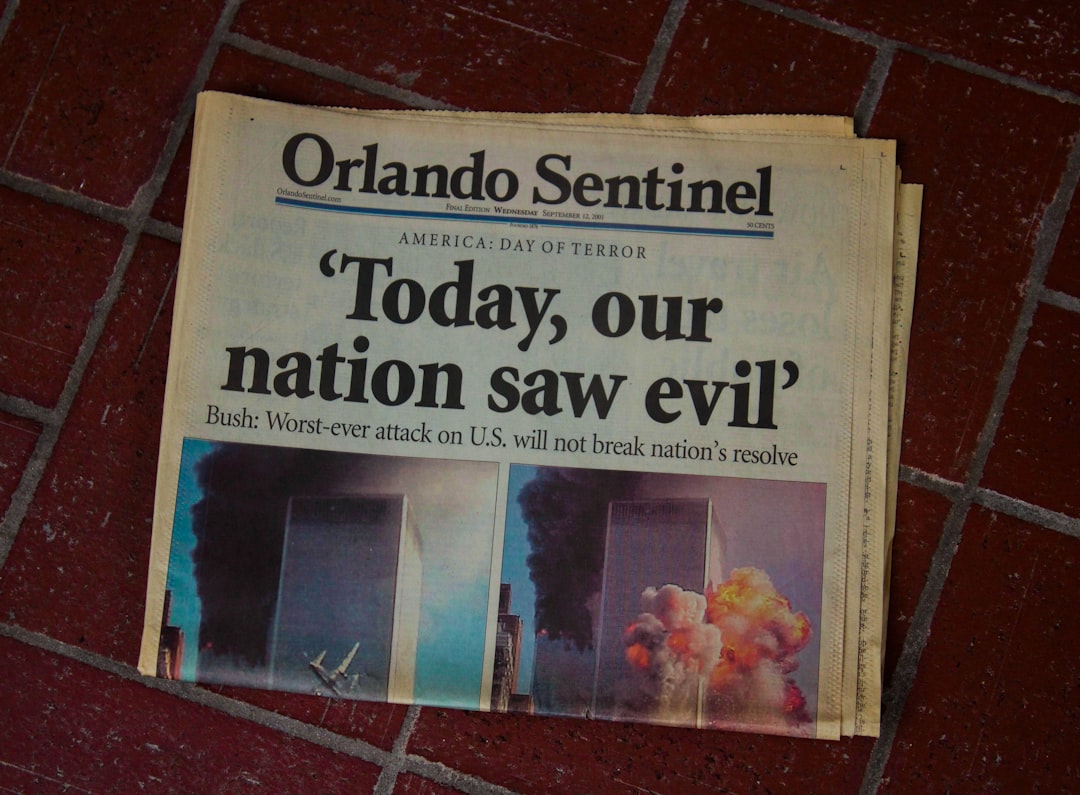
September 11, 2001 marked a pivot in American history—a day when the nation’s sense of safety was shattered, and its collective identity reshaped. The attacks triggered sweeping changes in security, government authority, social behavior, and even cultural cohesion. Today, the legacy of 9/11 lives on in how we remember, govern, and connect. A Nation in Shock—and Unity On that fall morning, the U.S. witnessed a tragedy that killed nearly 3,000 people and devastated the nation’s psyche. In the immediate aftermath, grief turned into solidarity—as most Americans tuned into televised coverage, felt sadness, anger, and fear, yet paradoxically came together in an extraordinary show of patriotism and trust in institutions. In the months that followed, confidence in government reached levels unseen in decades—fueled by mourning, resolve, and a collective desire to heal. The Rise of “Homeland Security” & Executive Power Almost immediately, the U.S. government unleashed legal and structural transformations. The USA PATRIOT Act, passed just weeks later in October 2001, significantly expanded surveillance and law enforcement powers for domestic security—raising ongoing concerns about civil liberties. Alongside this, the Department of Homeland Security was created in 2002, bringing together 22 agencies to coordinate security against future threats and reinforcing a new era of national vigilance. Economic Shock and Air Travel Overhaul The attacks triggered immediate economic consequences: U.S. stock markets plunged, airlines and insurers suffered heavy losses, and GDP forecasts were revised downward. Meanwhile, the aviation sector underwent a rapid and lasting modernization in security protocols and flight routing. Notably, Canada’s Operation Yellow Ribbon absorbed diverted flights in the chaos, highlighting international cooperation amid crisis. Legal Precedents and Global Conflict Congress quickly approved the broad-ranging Authorization for Use of Military Force (AUMF), enabling the U.S. to pursue adversaries globally—a mandate that has since been interpreted far beyond its original context, shaping nearly two decades of “forever wars.” These legal expansions—and the accompanying conflicts in Afghanistan and Iraq—signaled a new global posture that redefined American foreign policy. Remembering, Serving, and the Legacy Continues In the years since, public memory of 9/11 has evolved—from solemn remembrance to proactive service. Patriot Day, proclaimed a national day of mourning and service, now encourages millions of Americans each year to volunteer in honor of those lost and the unity felt afterward. These acts of service continue to reflect the enduring spirit of resilience and community. Connect with our experts on the history, significance, and lasting impact of 9/11 on American life and policy. Check out our experts here : www.expertfile.com

2 min
From its modest beginnings in the late 19th century to becoming America’s most-watched sport, professional football has not only entertained generations but also transformed communities, economies, and culture. Today, the National Football League (NFL) stands as a global brand, symbolizing both the triumphs and tensions of American life. Early Beginnings Professional football took root in the 1890s, when athletic clubs in Pennsylvania began paying players under the table. In 1920, a group of teams formed the American Professional Football Association, later renamed the NFL in 1922. Early decades were marked by instability, but the league grew steadily, and by the 1950s, with the rise of television, football began capturing national attention. The 1958 NFL Championship Game—dubbed the “Greatest Game Ever Played”—cemented football as America’s sport of the future, setting the stage for the AFL-NFL rivalry of the 1960s and the eventual Super Bowl, first played in 1967. Economic Impact Football is now one of the most powerful economic engines in American sports. The NFL generates more than $18 billion annually, with billions flowing into local economies through stadium construction, tourism, and broadcasting rights. Super Bowl weekend alone can inject hundreds of millions of dollars into host cities. The game has also reshaped industries—from sports broadcasting and advertising to fantasy leagues and legalized sports betting. It drives sponsorships, merchandise sales, and jobs connected to media, hospitality, and infrastructure. Social and Cultural Significance Football’s reach extends beyond the field. It has served as a stage for some of America’s most important social conversations—from racial integration in the 1940s, to gender roles in sports media, to the modern debates over player safety and activism. Figures like Jackie Robinson in baseball broke barriers, but in football, trailblazers such as Kenny Washington (first African American to reintegrate the NFL in 1946) helped reshape opportunity and inclusion. In more recent years, high-profile advocacy by players on issues ranging from racial justice to mental health has placed the sport squarely in the middle of national debates. At the same time, concerns about concussions and long-term health risks have fueled public dialogue on workplace safety and medical ethics, echoing issues seen across many industries. A Lasting Legacy Football is more than a game. It has become a unifying tradition—whether through Friday night lights in small towns, college rivalries that galvanize entire states, or Super Bowl Sunday as an unofficial national holiday. Its economic and cultural significance continues to expand, reflecting both America’s passion for competition and its ongoing social evolution. Connect with our experts about the history and significance of professional football in America: Check out our experts here : www.expertfile.com